For a franchise that touches so many forms of media, it makes sense for Pokémon’s 30th birthday to be an all-year affair.
The first sector of the franchise to hit the big 3-0 was its video game series, which kicked off the festivities back in February. Then, in April, Pokémon celebrated three decades since the initial serialization of Pokémon Pocket Monsters in the CoroCoro Comic Special magazine. But the one milestone collectors have been anticipating all year is the 30th anniversary of the Pokémon Trading Card Game, taking place in October.
All it takes is a quick look in the past to see that the Pokémon TCG takes its anniversaries very seriously. Just five short years ago, Pokémon issued Celebrations, a special 25th anniversary set that brought back 25 fan-favorite cards from the TCG’s past eras and reprinted them in a stellar subset known as Classic Collection. Prior to that, collectors were treated to Pokémon’s Generations and XY Evolutions sets in 2016, which also gave nods to previous generations with reprints and bespoke Full Art cards that remain iconic to this day. With each anniversary product, Pokémon’s intentions are clear: Capture the nostalgia of the past but continue to innovate with card types that will delight fans old and new.
Pokémon is set to deploy this winning formula yet again with the release of its 30th Celebration set on Sept. 16. One special aspect of this release is the fact that it will take place simultaneously across all available languages for which the TCG is printed — a perfect way to honor Pokémon’s unifying appeal across cultural boundaries. With no staggered releases, this September will feel like one big worldwide party.
After 2021 Celebrations became a smash hit, Pokémon retained the branding and iconography for future anniversaries. The famous Pikachu head logo returns in the new 30th anniversary set, updated with “30” printed in red on Pikachu’s cheeks. This symbol is featured proudly on a number of 30th Celebration products and cards.
It goes without saying that each new card revealed for this set already has fans in a frenzy.
For starters — pun intended — each booster pack will come with one of 30 never-before-seen Pikachu cards, each featuring artwork by a different illustrator and treated as a subset with their own Pikachu-themed numbering at the bottom of the card. One can’t help but draw comparisons to the Pikachu cards featured in the 2021 Celebrations set, especially the Pikachu V-UNION card, which boasted several different Pikachu of various art styles. But the decision to separate each one into its very own card within 30th Celebration is a welcome change that offers even more for collectors to chase.
Also generating hype is the brand new rarity revealed for the set: Futuristic Rares.
The Pokémon appearing on these cards are given a metallic sheen — more akin to a spaceship than a living organism — truly living up to the futuristic name. The backgrounds are composed of floating Energy symbols and a large Poké Ball, and each card’s rarity symbol changes colors based on the dominant color of the card. With Pikachu, Mew and Mewtwo starring in the lineup, Pokémon is once again melding Gen I nostalgia into cutting edge designs, depicting fan-favorites in unexpected ways. But this isn’t to say that this set is all about overhauling the tried and true card types that collectors have come to expect. To the contrary, new Illustration Rares are still very much in the mix, each one showing slice-of-life scenes and jaw-dropping artwork. A particularly beautiful new card featuring artwork by Amelicart shows a lazy Lapras floating down a tropical inlet, with cameos from Psyduck, Shaymin and Spheal. Another shows a Drifloon drifting above a lively carnival, disguised among a sea of balloons.
Aside from the main set release, there is also a variety of specialty products in support of the anniversary, perhaps none more anticipated than the Ultra Premium Collection dedicated to Espeon and Umbreon. The Special Illustration Rares contained in this release are destined to become modern grails for Eeveelution fans. Appropriately, Espeon’s card shows a daytime setting, while Umbreon’s shows nighttime. Both cards are effectively foils of one another, but depict each Pokémon overlooking a scene of celebration. A “30” is visible in the sky of each illustration, appearing as a cloud formation on Espeon’s card and as a firework blast above Umbreon. Combine the ravenous popularity of Eeveelutions, the significance of the 30th anniversary, and the awe-inspiring illustrations from artist REND, and you have two cards guaranteed to create collecting hype for years to come.
But enough beating around the Bramblin. We all know who the biggest superstars of the 30th Celebration are: The reprinted grails from Pokémon’s past. Similar to 2021’s Celebrations Classic Collection, we are in store for a new wave of nostalgic cards, some of which have not been reissued in more than two decades. Once again, fans will have the opportunity to collect cards that might not be easily accessible otherwise. While an original 2003 Aquapolis Crystal Lugia may be a true white whale for many people, this new set gives collectors an alternate way to get their hands on it and others.
But while these cards are reprints, they are anything but carbon copies. Like other cards in the set, they sport the Pikachu head 30th anniversary logo, along with gorgeous gold holofoil borders. If that weren’t enough foil, there are certain cards that were originally issued as non-foil cards but have been given a foil treatment on their illustrations. The selected cards represent iconic staples of both collectibility and gameplay from throughout the TCG’s long history, touching the Wizards of the Coast era, Diamond & Pearl, Black & White, Sword & Shield and others. The collection also represents a multitude of card types that have since been retired over the years, from LEGEND to Tag Team to VSTAR. These 30 cards give much deserved flowers to each period of the Pokémon TCG. It’s an acknowledgement of collectors of all ages, reminding that no matter which era you entered the fandom, Pokémon is for you.
Before chasing the reprints, let’s brush up on the originals ...
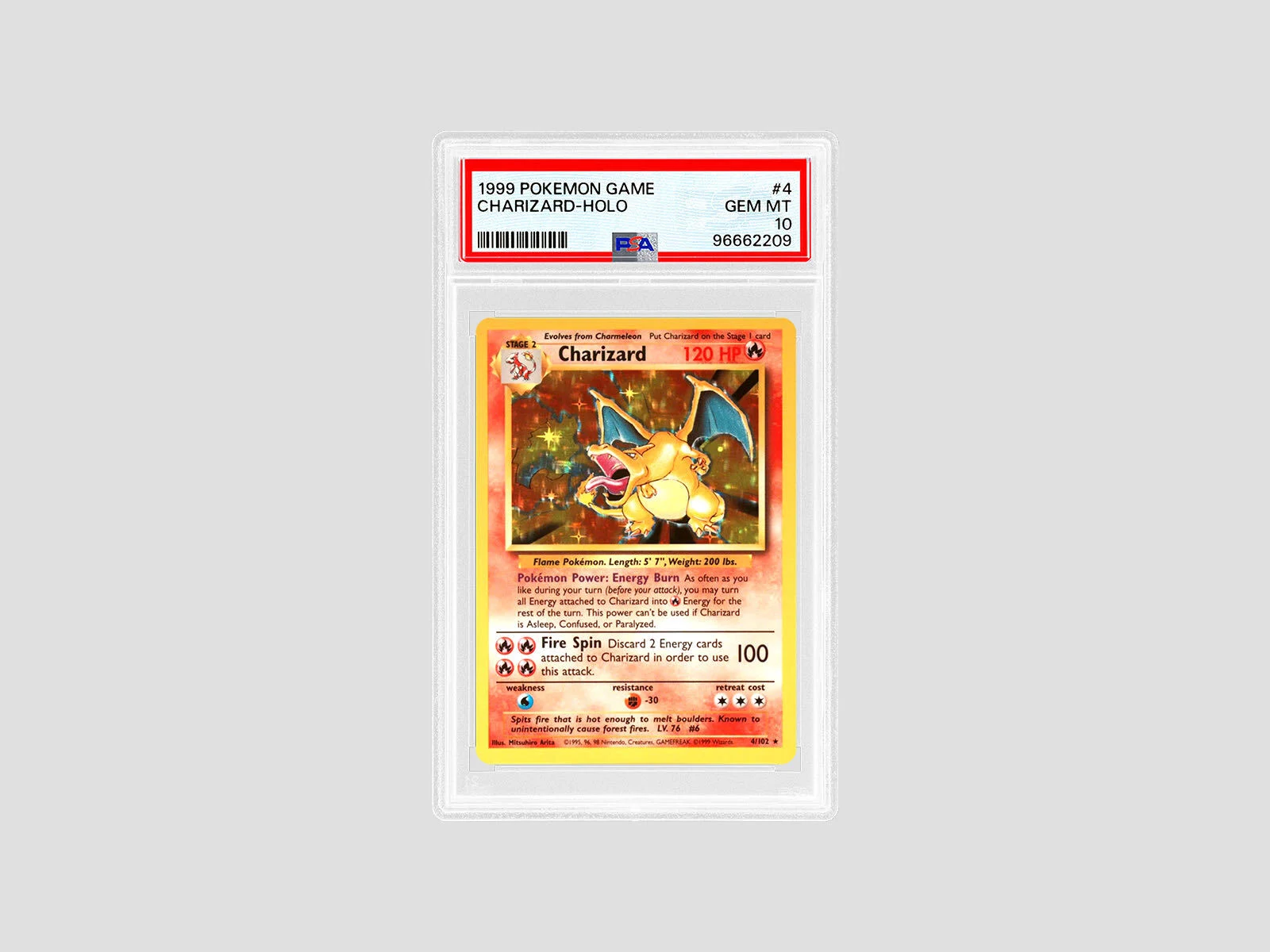
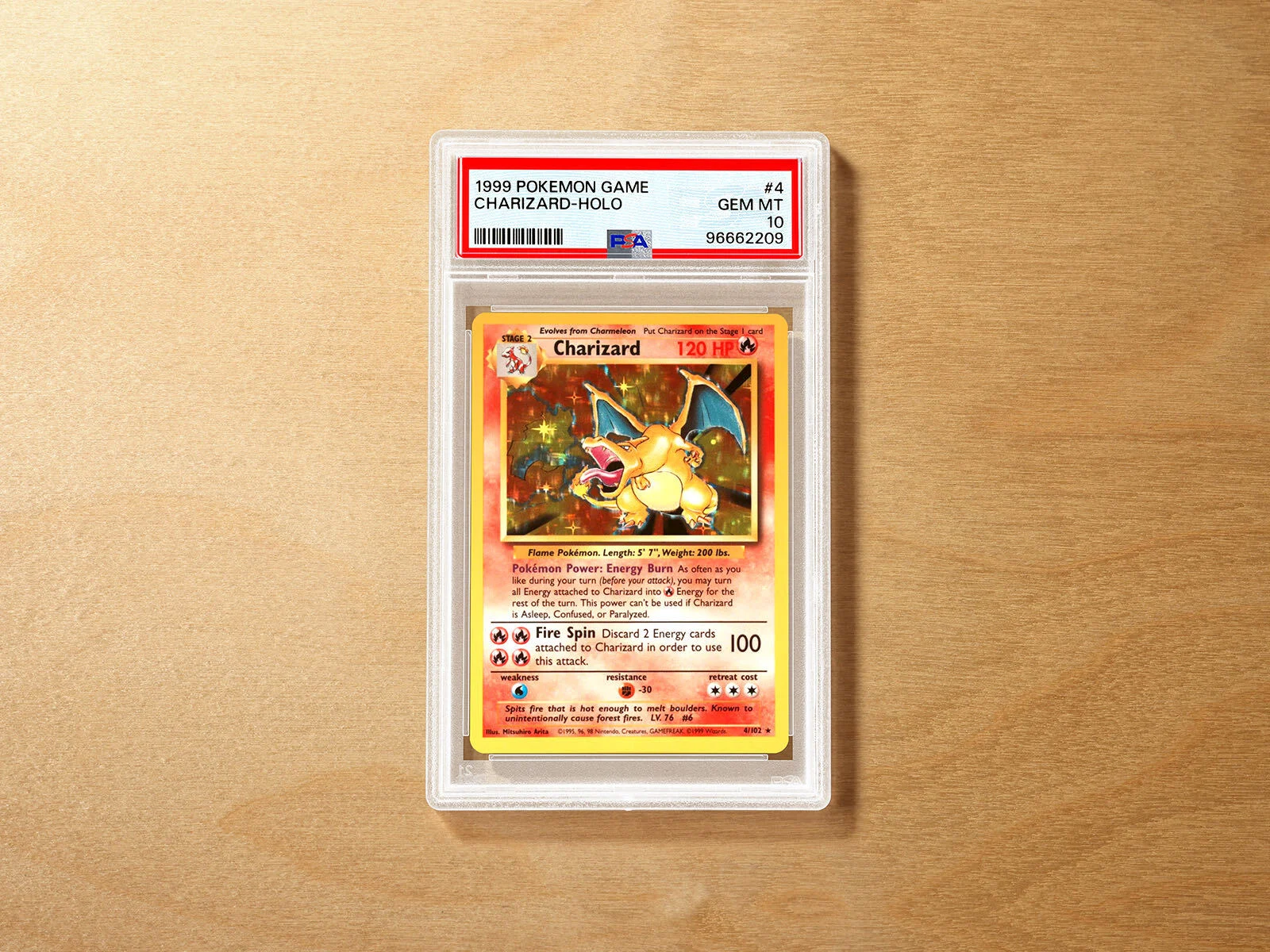
1999 Pokémon Game
Charizard-Holo #4
Like the 2016 XY Evolutions and 2021 Celebrations sets that came before, Pokémon’s 30th Celebration continues the anniversary tradition of ushering out yet another reprint of this timeless hobby gem. Prior to this latest iteration, this iconic card was also reissued in the Base Set 2 in 2000 and the 2002 Legendary Collection set. On playgrounds and in cafeterias in the late ’90s, this card was the stuff of legend. If a young collector brought one to school, crowds would form. And while some might have offered to trade for it, nothing ever seemed comparable to this card. It was a status symbol of sorts, granting you bragging rights galore and the feeling of being a true Pokémon master. Fast forward to the modern hobby, and the flame of this winged lizard hasn’t been extinguished one bit. Whenever one is pulled from a sealed vintage pack, or when a PSA Gem Mint 10 grade is revealed, it’s cause for celebration. From that intimidating pose to the timeless illustration by Mitsuhiro Arita, when you see this card, you feel its weight within Pokémon’s history. With so many reissues, especially in anniversary products, The Pokémon Company clearly understands the power of this card, and by offering new collectors to find it in modern sets, Charizard’s magnitude is able to echo across generations.
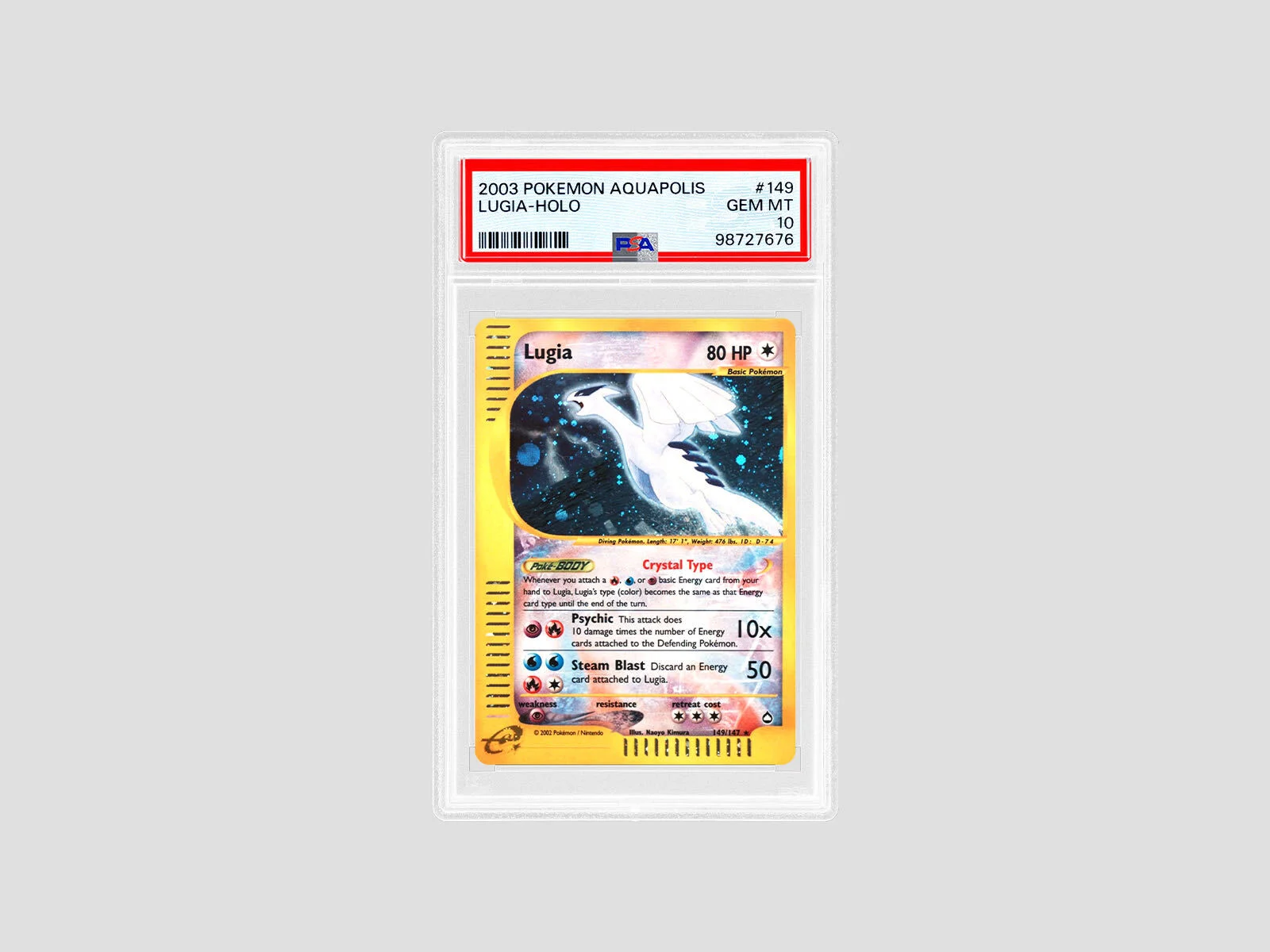
2003 Pokémon Aquapolis
Lugia-Holo #149
While Charizard’s inclusion in the 30th Celebration set is tradition at this point, this Lugia’s reappearance feels more like a rare miracle. After the release of 2003’s Aquapolis set, this card has remained a true original, never receiving a reprint in over 20 years. In the decades that have passed since 2003, its popularity and collectability have — like Lugia in the card’s illustration — shot to the sky. Like all Crystal cards of the e-Series, this card is incredibly rare. Upon its initial release, Wizards of the Coast was on the cusp of handing over the Pokémon license, Yu-Gi-Oh! had just premiered in North America, and some young collectors were beginning to move onto other interests. As a result of these factors, cards of the e-Series were not as ubiquitous as those from 1999’s Base, Jungle or Fossil. This set the stage for Crystals to become monumental grails for collectors, and Crystal Lugia is now widely considered to be the finest and most desirable Lugia card ever printed, perhaps only rivaled by its 1st Edition Neo Genesis print. When this card was revealed during the wider Pokémon Day announcements in February this year, it sent shock waves through the hobby. Suddenly, collectors who would never have a chance at attaining this card were given unprecedented access to get their hands on it. And therein lies the joy of reprints.
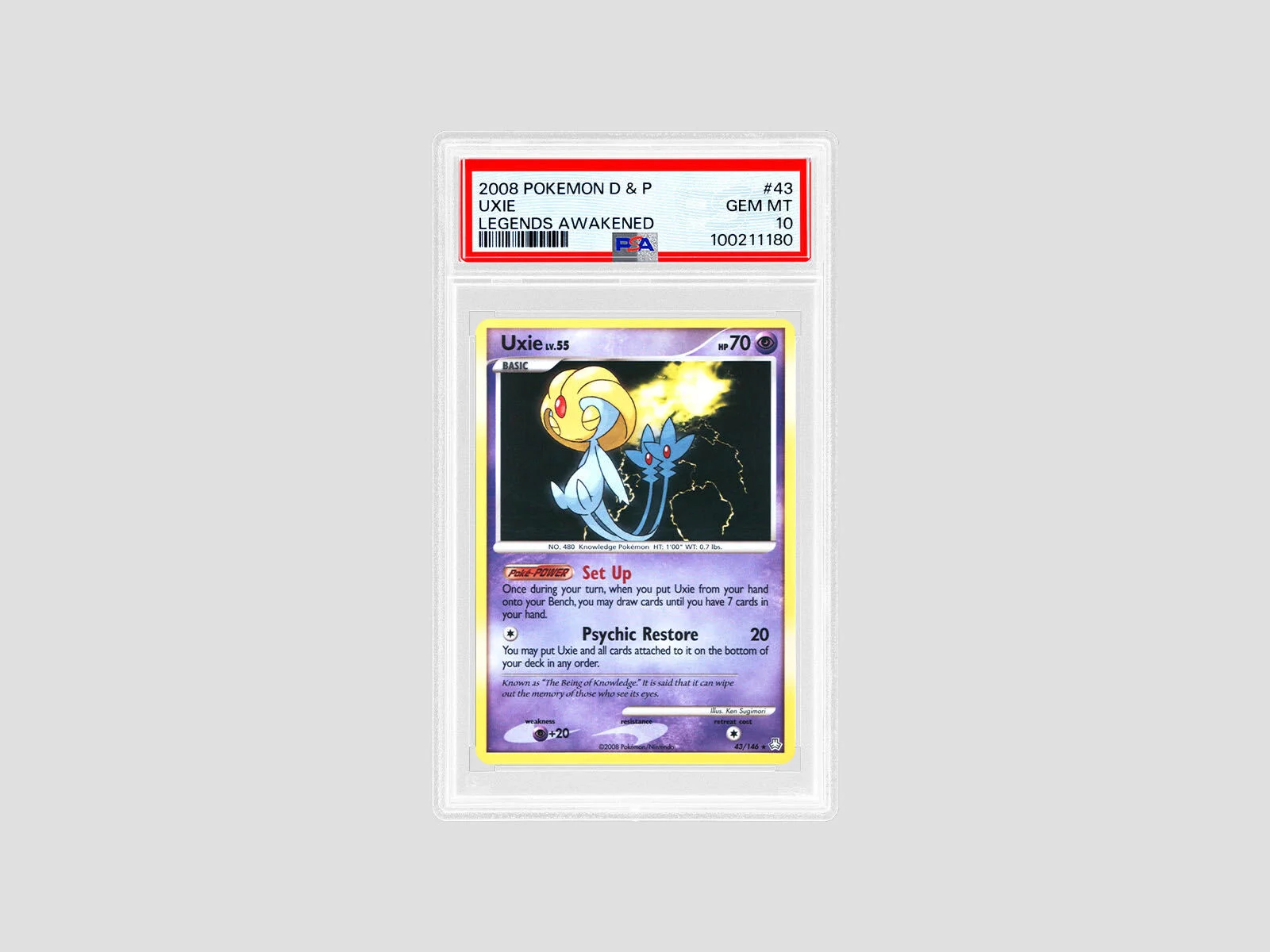
2008 Pokémon Diamond & Pearl
Uxie #43
Legends Awakened
Uxie was introduced in the Gen IV Pokémon Diamond & Pearl video games as part of a Legendary “lake guardians” trio that also included Azelf and Mesprit. To casual collectors, it may seem curious to place this card side-by-side with the likes of a Base Set Charizard or Aquapolis Lugia. After all, it was initially released in Legends Awakened as a non-holographic Rare card, and its PSA population currently stands at fewer than 100. However, to players of the Trading Card Game, it’s clear why this is an essential entry to this latest roundup of reprints. Upon release, this Uxie card became one of the most popularly used cards in competitive decks for its Set Up Poké-POWER, which allowed players to draw up to seven cards upon placing Uxie onto the bench. Especially in instances when the player had very few cards in their hand, this ability could quickly turn the tide of gameplay by rapidly gathering resources. Uxie was so competitive that it was reprinted within multiple decks commemorating Pokémon World Champions such as Yuta Komatsuda (2010 World Champion, Master Division) and David Cohen (2011 World Champion, Senior Division), both of whom used the card in their decks. Pokémon also acknowledged the significance of this card’s playability by including it in the 25th Anniversary Creatures Deck, an extremely coveted half deck celebrating some of the TCGs most impactful cards.
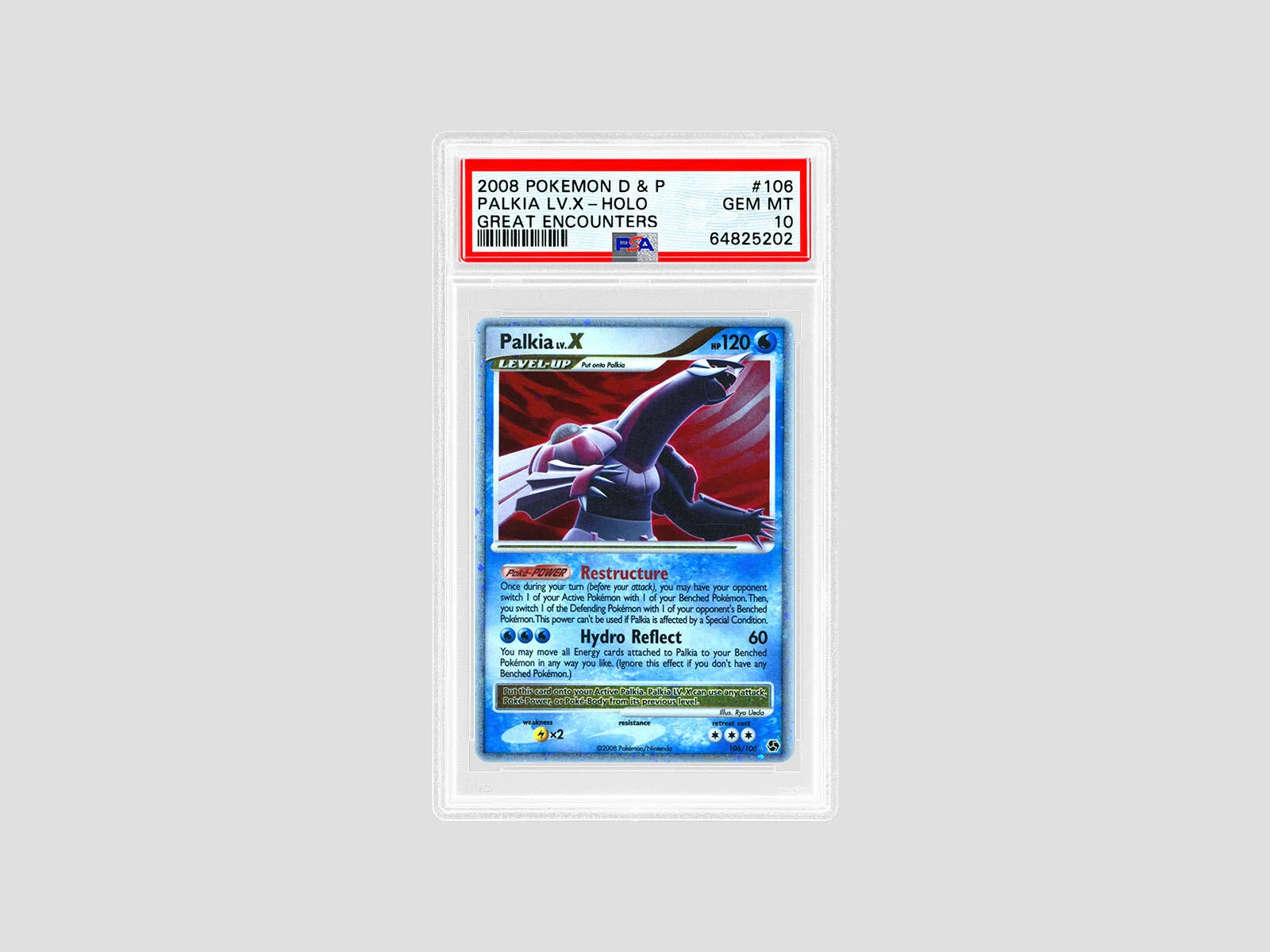
2008 Pokémon Diamond & Pearl
Palkia Lv.X #106
Great Encounters
The back of 2008’s Diamond & Pearl Great Encounters booster box includes text reading, “Dialga. Palkia. Darkrai. Who will stand victorious?” This statement makes it clear that Great Encounters is all about the sheer power of these Sinnoh Legendaries. So what better way to celebrate that power than giving each of these three titans their own LV.X card? LV.X was a card type used in the TCG from 2006 to 2009, notable for their holofoil borders and card artwork that broke out of the traditional borders. In gameplay, LV.X Pokémon were played on top of a Pokémon to level it up, in a similar mechanic to evolution. When in play, these Pokémon could access all of the attacks, Poké-Power and Poké-Body abilities from their previous level, offering players more options for strategies. While the Diamond & Pearl era may have been considered overlooked at one point in time, modern collectors have mined this era for its heavy-hitting LV.X cards. LV.X may be a bygone mechanic, but the 30th Celebration set allows fans to get reacquainted with one of its best examples.
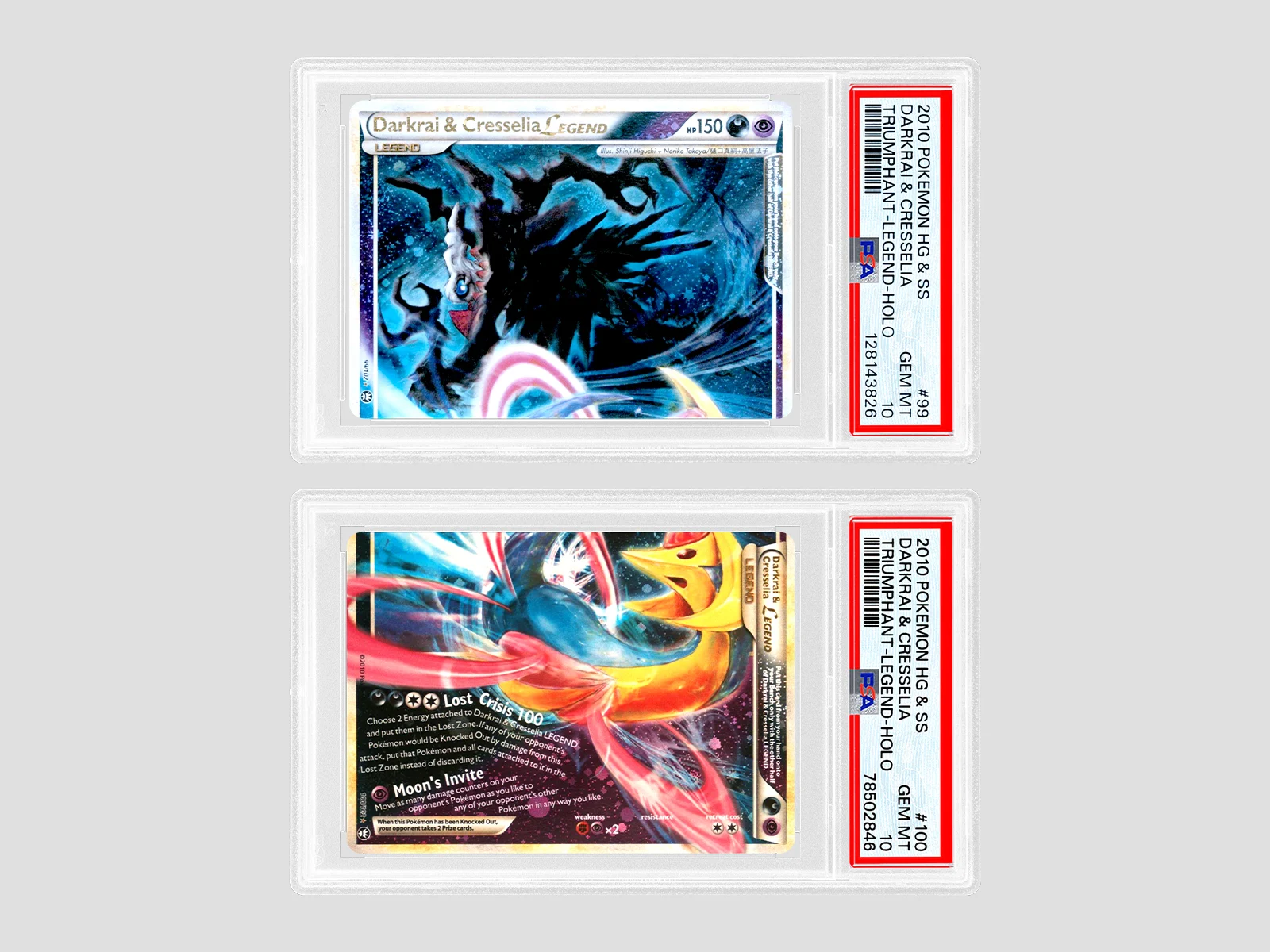
2010 Pokémon HeartGold & SoulSilver
Darkrai & Cresselia #99 & #100
Triumphant-Legend-Holo
To this day, there are still very few Pokémon cards that look like these. LEGEND cards were produced during the HeartGold & SoulSilver era and featured a mechanic that involved combining two cards that act as a single card in gameplay. The card artwork and design elements were printed in a horizontal orientation as opposed to the standard vertical one, allowing two cards to fit together like puzzle pieces to create a full image. This concept was adapted to later mechanics such as Sword & Shield’s V-UNION and the Stadium cards from this year’s Japanese Storm Emeralda set. One humorous detail about these cards is the placement of attack, Poké-BODY and Poké-POWER text, which is shown scattered disorderly across the card as a result of each Pokémon seemingly bursting out of the card’s confines. It’s as if the Pokémon are so powerful that they are breaking the very structure of their card itself. The majority of LEGEND cards show multiple Pokémon appearing together on a singular card artwork, laying the groundwork for the later Tag Team cards of the Sun & Moon era. Intended to be played like a single card, each LEGEND card has attacks derived from each Pokémon, like Darkrai’s Lost Crisis and Cresselia’s Moon’s Invite shown here. This card type is quirky and bizarre, but we welcome its return in the 30th Celebration set with open arms.
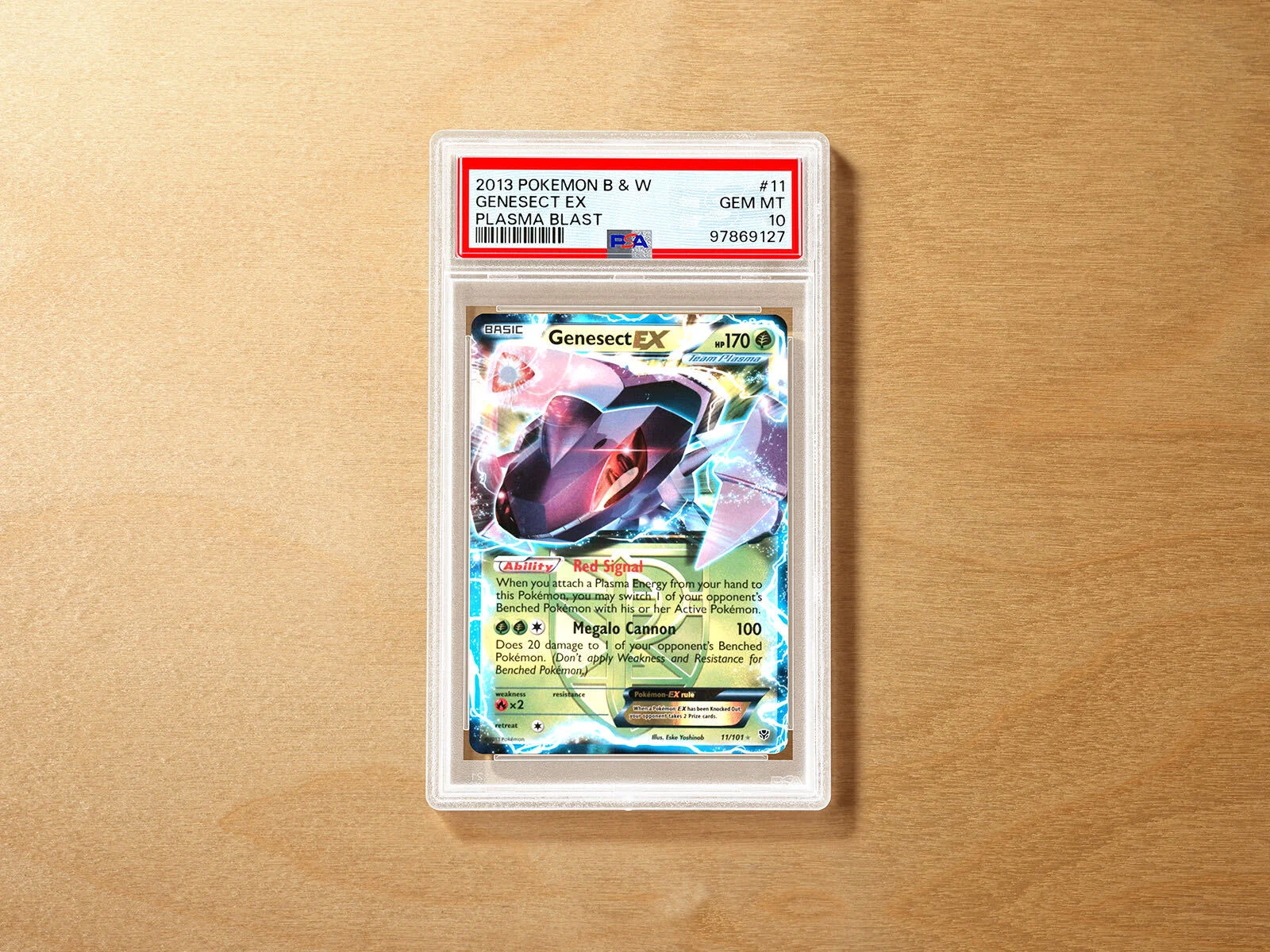
2013 Pokémon Black & White
Genesect EX #11
Plasma Blast
2013’s Plasma Blast set was the final entry of the “Plasma” series of expansions released during the Black & White era. These sets are based on the villainous Team Plasma organization, emblazing certain Pokémon cards with the Team Plasma insignia. The era also introduced the concept of Plasma Energy cards, which act like Colorless Energies but can unlock and interact with the abilities of certain Pokémon, such as this Genesect EX. When you attach a Plasma Energy to this card, Genesect’s Red Signal ability activates, allowing you to swap your opponent’s Active and Benched Pokémon. Coupled with its Megalo Cannon attack, this ability allowed players the power to dole out strategic amounts of damage with a commanding sense of control. Genesect EX proved to be highly playable and was famously a core part of Andrew Estrada’s 1st Place-winning deck during the 2014 Pokémon World Championships in Washington D.C.
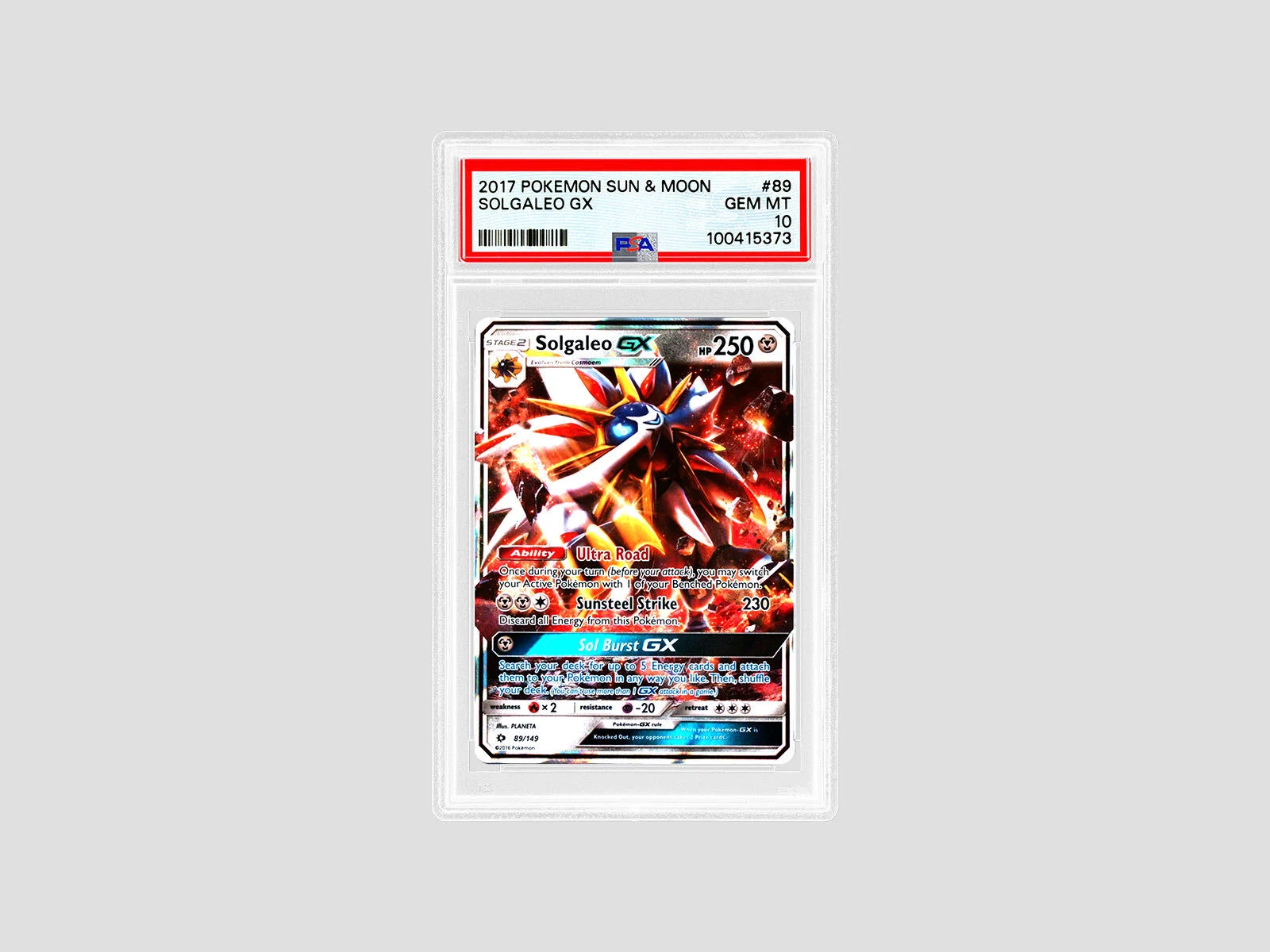
2017 Pokémon Sun & Moon
Solgaleo GX #89
The 30th Celebration reprint set has a plethora of Legendary Pokémon from all eras, so it only makes sense to have Solgaleo in the mix to represent Gen VII. This card from Sun & Moon’s 2017 base set is a GX card, another retired card mechanic that debuted and was sunsetted in the same era. GX Pokémon are similar to the EX cards from the past in that they grant multiple prize cards upon being knocked out and boast higher attack and HP stats, but are made unique by their inclusion of “GX Attacks.” These were devastating abilities that were limited to one use per game, such as Solgaleo GX’s Sol Burst attack, which allowed players to rapidly gather Energy cards. Since these attacks were a one-and-done, the timing of them in battle was absolutely critical.
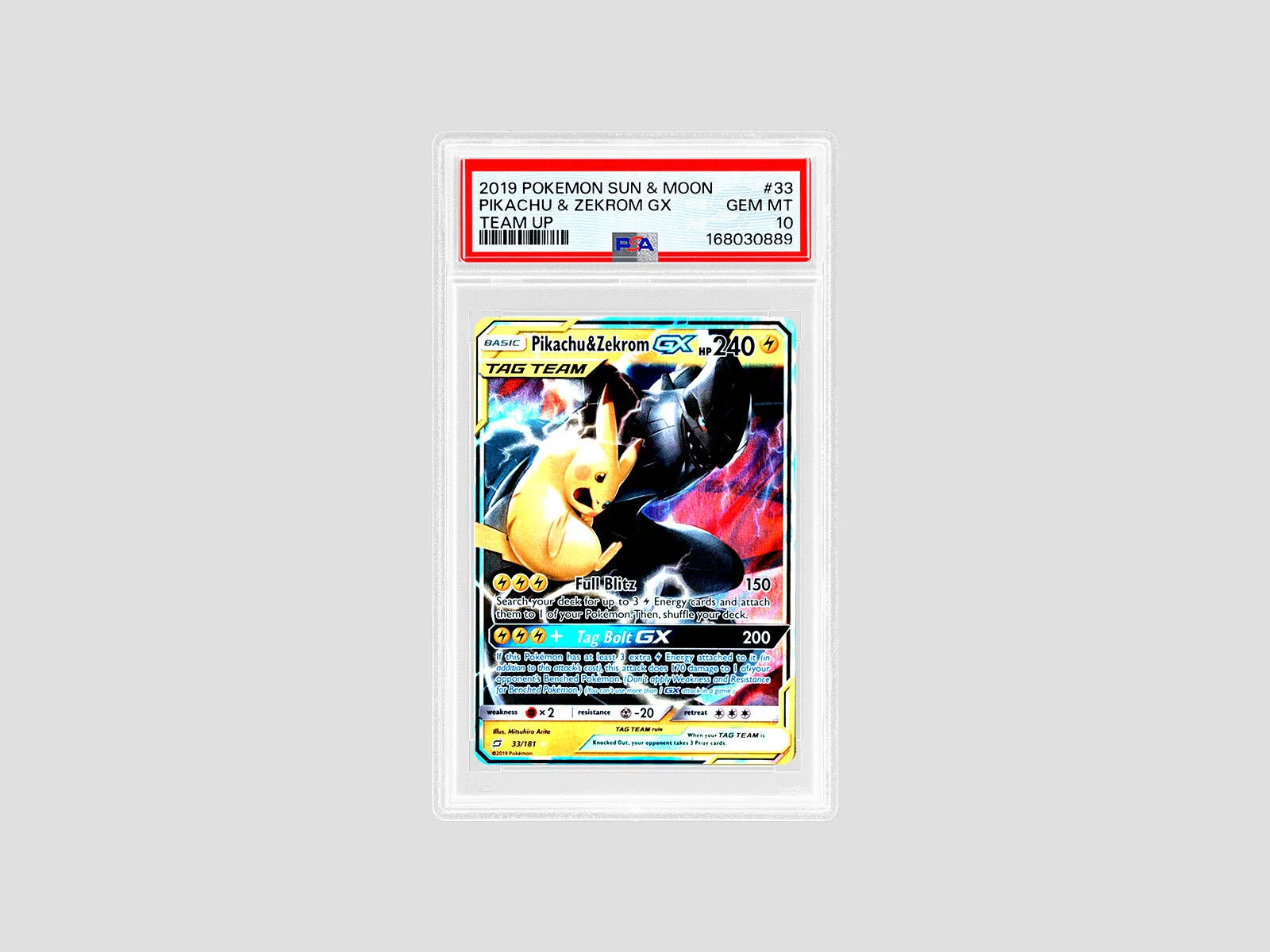
2019 Pokémon Sun & Moon
Pikachu & Zekrom GX #33
Team Up
The TAG TEAM card type introduced in Sun & Moon’s Team Up remains one of the most memorable advancements in both gameplay and card artwork. Suddenly, collectors and players were treated to cards featuring multiple Pokémon fighting alongside one another on the same illustration. In battle, TAG TEAM cards typically have higher HPs and grant a whopping three prize cards when knocked out. Later on, Pokémon also introduced TAG TEAM Supporter cards, which featured multiple trainers on a single card. To this day, it is thrilling to see these various duos and trios, and fans have been clamoring for them to make a comeback ever since. Some combinations — like Latios and Latias — are no-brainers, but the less likely team-ups — such as Wailord and Magikarp — are just as delightful. Pikachu & Zekrom GX is an exciting pairing of Electric types that became a formidable force in organized play. It was notably used by Junior Division champ Haruki Miyamoto to take home first place at the 2019 Pokémon World Championships. Given its status as a Legendary Pokémon, one can imagine Zekrom doing most of the heavy lifting in a real-life Pokémon battle when paired with Pikachu, but regardless, it’s fun to imagine these two becoming allies. By including this card in the 30th Celebration set, Pokémon gives a much deserved nod to the incredible legacy of TAG TEAM cards.
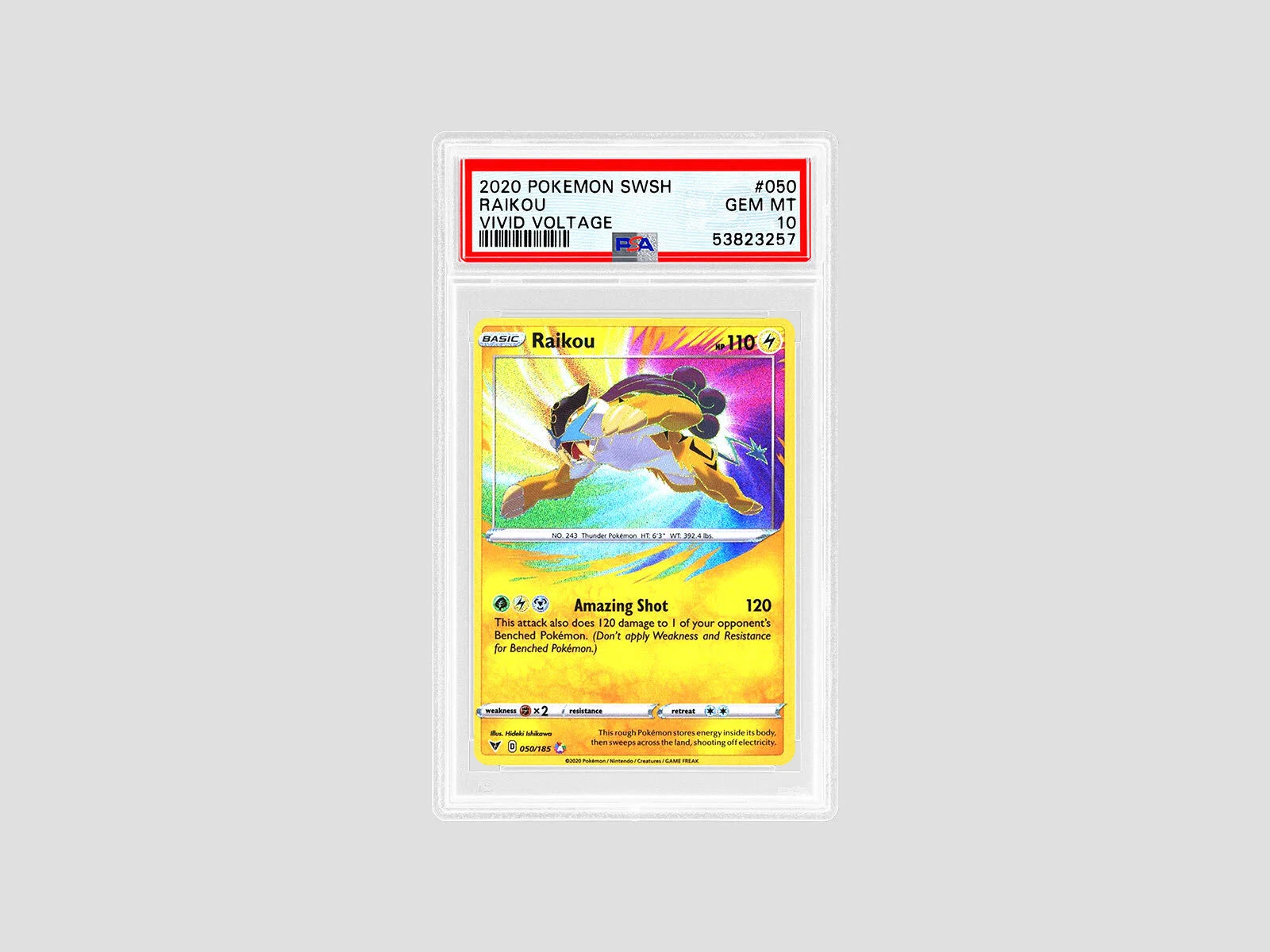
2020 Pokémon Sword & Shield
Raikou #050
Vivid Voltage
With only nine ever produced, Amazing Rares are one of the shortest-lived card types represented in the 30th Celebration set, alongside Crystal Pokémon and LEGEND cards. These unique cards debuted in 2020’s Vivid Voltage before making just one more appearance in 2021’s Shining Fates. They are characterized by a bespoke rainbow rarity symbol at the bottom of the card, and colorful backgrounds that explode out of the art frame. Each attack contains the word “Amazing,” and requires an eclectic mix of Energies in order to use. This Raikou’s Amazing Shot attack, for instance, calls for a Grass, Electric and Metal Energy. This is likely due to the rainbow theme of these Pokémon, implying they have powers that transcend typical Energy parameters. Additionally, all nine Amazing Rares are either a Legendary or Mythical Pokémon, perhaps allowing them to tap into untold abilities. While not outrageously difficult to find compared to other cards being reprinted for 30th Celebration, the eye appeal and colorful aesthetic of Amazing Rares cannot be denied, making this a welcome return.
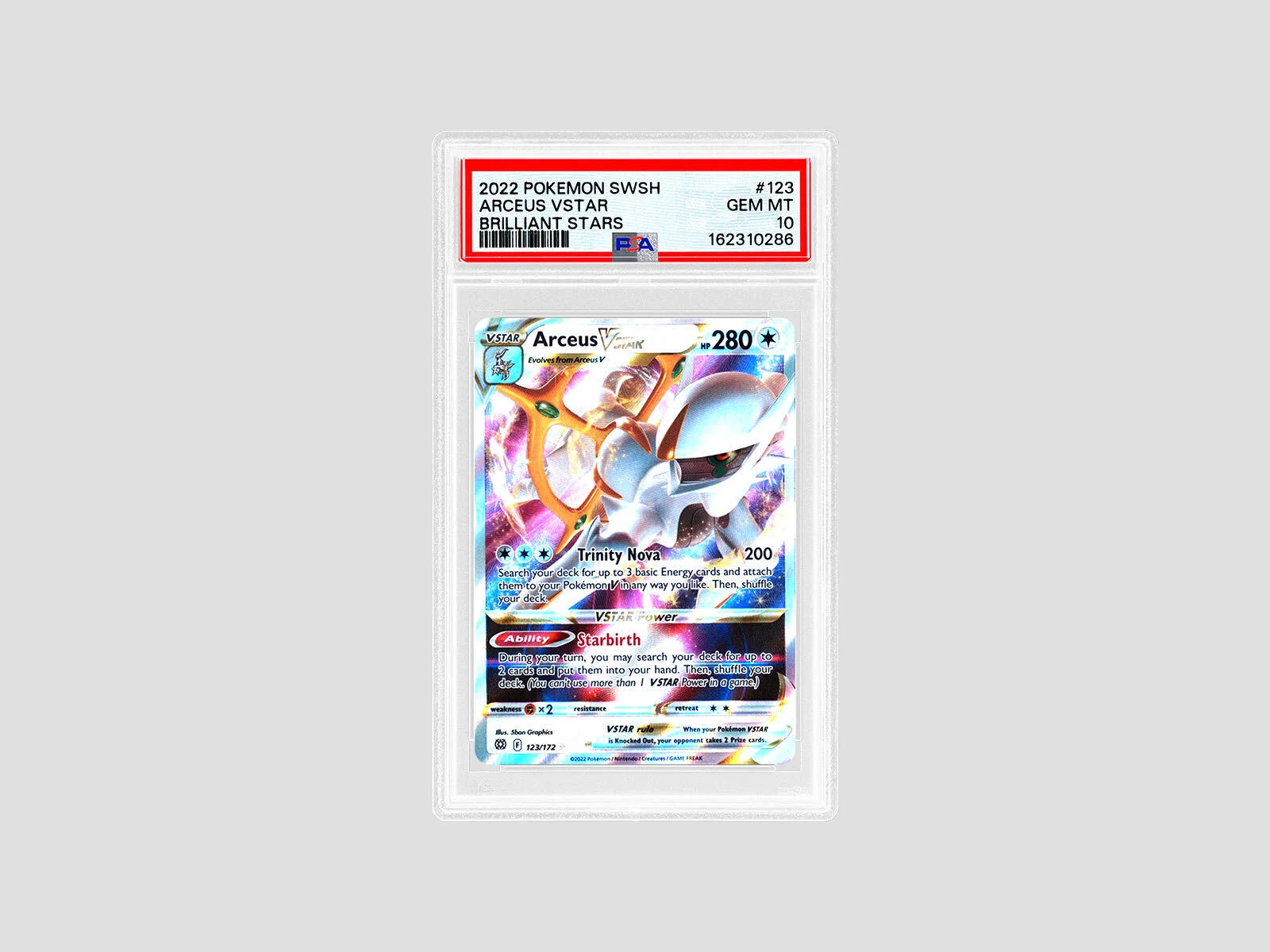
2022 Pokémon Sword & Shield
Arceus VStar #123
Brilliant Stars
While the same could be said at any point in the past three decades, 2022 was a particularly exciting time to be a Pokémon fan. The groundbreaking Pokémon Legends: Arceus was released, ushering a whole new approach to the video game series, favoring an open-world environment and a streamlined battle system. With Arceus serving as the true final boss in the game, the godlike Pokémon had a resurgence across the Pokémon franchise, including in the TCG. Released just a month later, Brilliant Stars rolled out six new Arceus cards and introduced players to the VSTAR card type. Similar to the V, GX and EX types of the past, these were superpowered Pokémon and had abilities that were limited to one-per-game use, much like GX Pokémon. Arceus VSTAR’s special ability, Starbirth, gave players the power to search their deck for two cards of their choice, a move that could easily shift the scales in battle. Arceus VSTAR was notably given an all-metal reprint, which was distributed in the GameStop-exclusive Arceus VSTAR Ultra-Premium Collection. While this card doesn’t wield as much nostalgia as perhaps other 30th Celebration reprints, it is hard to believe it has already been more than four years since its initial release. Given Pokémon’s enduring nature, it’s only a matter of time until we look back at modern cards like this with the same nostalgic longing.